Draft preview — not yet published
Dinner night · Ethiopia
Quick Doro Wat-Style Chicken
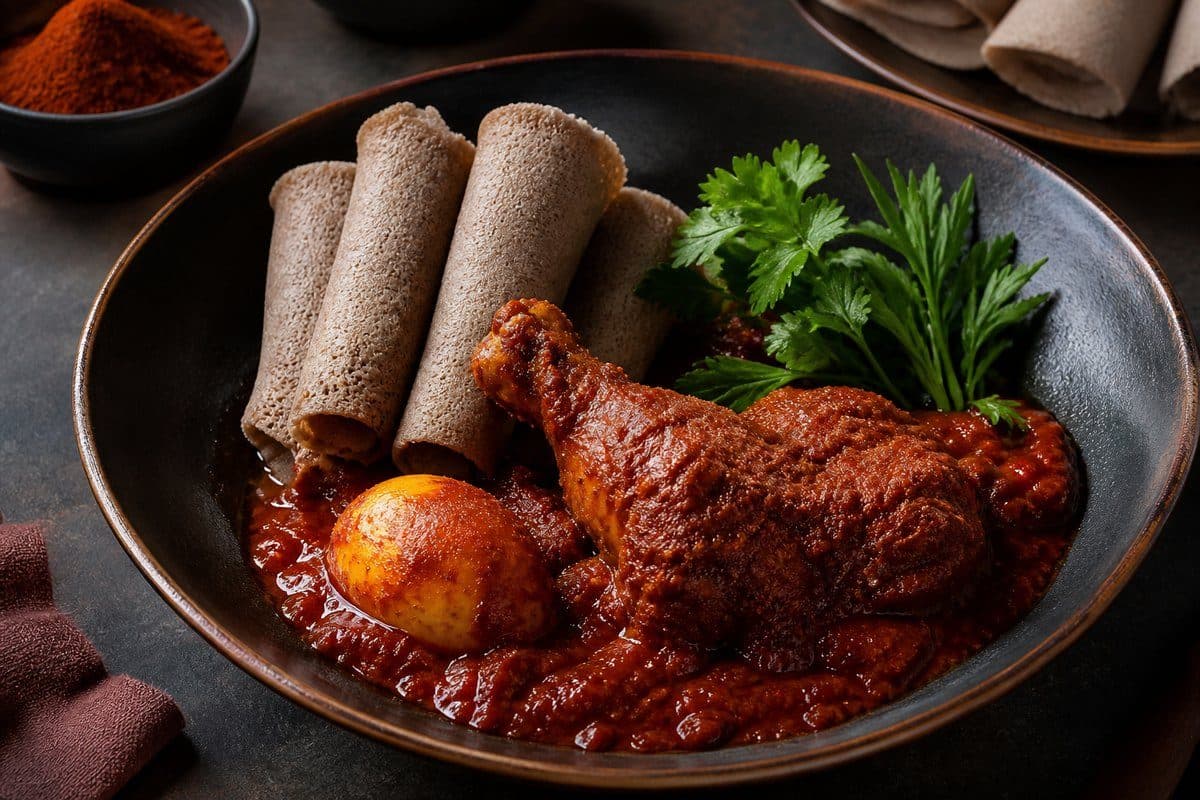
Slow-softened onion, ginger, garlic, and berbere build a rich Ethiopian-inspired chicken stew in a weeknight-sized pot.
- Prep
- 20 min
- Cook
- 50 min
- Total
- 70 min
- Serves
- 2 generously, with 1 lunch portion
- Budget
- $23–$34
This streamlined doro wat-style chicken braises thighs in a deeply seasoned onion sauce with ginger, garlic, berbere, tomato paste, and stock. The texture is thick and spoon-coating rather than soupy, with warm chile and spice balanced by lemon. Rice is the easiest base, while purchased injera gives the meal its characteristic tangy, scoopable companion.
Why we love it
The dish rewards a modest amount of patient stirring with a dinner that tastes far more elaborate than the ingredient list suggests. Spice can be tailored: use less berbere in the shared pot and offer more at the table for Tony. It is a fun regional departure while still relying on familiar chicken, onion, and rice.
Field notes · Origin & culture
Doro wat is a celebrated Ethiopian chicken stew, often made with a substantial quantity of slowly cooked onions, berbere spice, seasoned clarified butter called niter kibbeh, and hard-boiled eggs. It is commonly eaten with injera and is associated with holidays and special occasions as well as shared meals. This faster version uses oil or butter and a shortened onion cook, so “doro wat-style” is intentional rather than a claim of full traditional technique.
Noteworthy ingredients
- Berbere: An Ethiopian chile-spice blend. Whole Foods may carry it; H Mart's spice aisle is worth checking, or buy from a dedicated African market if convenient. Substitute a blend of 2 teaspoons paprika, ½ teaspoon cayenne, ½ teaspoon ground coriander, ¼ teaspoon cumin, and pinches of cinnamon and clove.
- Injera: A fermented, tangy Ethiopian flatbread traditionally made with teff. Whole Foods availability varies; an Ethiopian market or restaurant is more reliable. Rice is an easy substitute for this weeknight card.
- Niter kibbeh: Ethiopian spiced clarified butter. This recipe does not require it, but a spoonful adds depth if available; use unsalted butter or olive oil otherwise.
Prep — 20 min
- Finely dice or pulse the onions until very small but not puréed. Mince the garlic and grate the ginger.
- Cut the chicken into large pieces. Season with ½ teaspoon salt and 1 tablespoon lemon juice.
- Whisk 1½–2 tablespoons berbere into 1 cup chicken stock. Start with the smaller amount for a milder shared pot.
- Place the eggs in a small saucepan, cover with cool water, and bring to a boil. Cover, remove from heat, wait 10 minutes, then cool in ice water and peel.
- If serving rice, rinse and start it so it finishes with the stew. If serving injera, let it come to room temperature.
Cook — 50 min
- Put the dry Dutch oven over medium heat. Add the onions and 2 tablespoons water. Cook for 10 minutes, stirring often, until collapsed and the water has evaporated.
- Add 2 tablespoons olive oil or butter and ¼ teaspoon salt. Continue cooking for 10–12 minutes, stirring frequently, until the onion is soft and golden. Lower the heat if it catches.
- Stir in the garlic and ginger for 1 minute. Add the tomato paste and cook for 2 minutes.
- Pour in the berbere-stock mixture and scrape the bottom of the pot. Simmer for 3 minutes.
- Nestle the chicken into the sauce. Cover and simmer gently for 18 minutes, turning once.
- Lightly score the peeled eggs and add them to the pot. Uncover and simmer for 8–10 minutes, until the chicken reaches 165°F and the sauce is thick.
- Finish with 1–2 teaspoons lemon juice. Taste for salt and heat; serve extra berbere separately rather than over-spicing the shared pot.
Serving
Spread injera on a platter and spoon the stew and eggs over it, or serve in shallow bowls beside rice. Cut each egg in half so both diners can share. For the child, pair rice with interior pieces of chicken and a smaller amount of sauce; plain yogurt may be offered as a cooling side, though it is not part of the stew. Refrigerate leftovers for up to 3 days and reheat gently with a splash of stock.